



In March 2026, Indian equity markets saw a sharp decline. The Sensex and Nifty50 fell by more than 10% in a single month. (Source: Fortune India) Whenever markets fall like this, investor behaviour changes quickly.
â— Many investors become cautious
â— SIPs get paused or stopped
â— New investments slow down
For investors, this is a reaction to uncertainty. But for MFDs, it creates a real business challenge. Lower investments directly impact AUM growth and trail income.
SIP Stoppages Are Increasing
Recent data from the Association of Mutual Funds in India highlights this trend clearly:
â— SIP stoppage ratio increased to 75.62% in February 2026
â— Around 49.7 lakh SIPs were discontinued or completed
◠Monthly SIP inflows declined to ₹29,845 crore
While part of the decline can be linked to February being a shorter month, the overall trend shows that a significant number of investors are slowing down or stopping their SIPs.
The Real Challenge: Investor Confidence
During volatile periods, investors tend to focus on short-term market movements rather than long-term goals.
Common concerns include:
â— Is this the right time to invest?
â— Should I pause my SIP?
â— What if the market falls further?
Even when long-term investing remains the right approach, fear often leads to poor decisions. This is where traditional advice like “stay invested” may not be enough.
Shifting Their Mindset Shift From Returns to Goals
Instead of focusing only on returns or market recovery, the conversation needs to shift towards goal-based planning.
When investments are linked to clear goals such as:
â— Child’s education
â— Retirement planning
â— Buying a house
Investors start thinking beyond short-term volatility. A market correction over a few months has a limited impact on a goal that is 10–15 years away. This shift in perspective helps investors focus on long-term goals.
How MF Software Supports This Approach
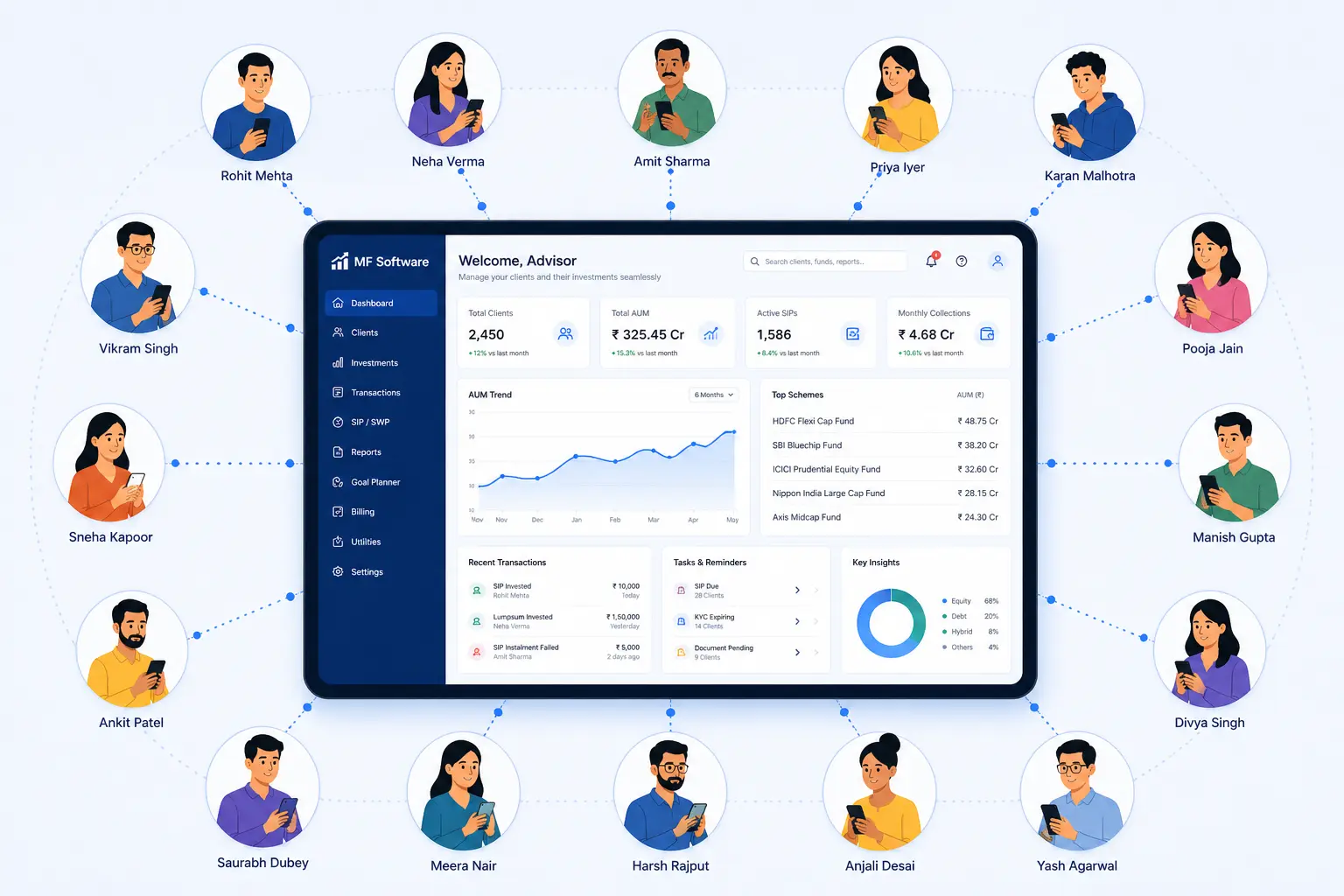
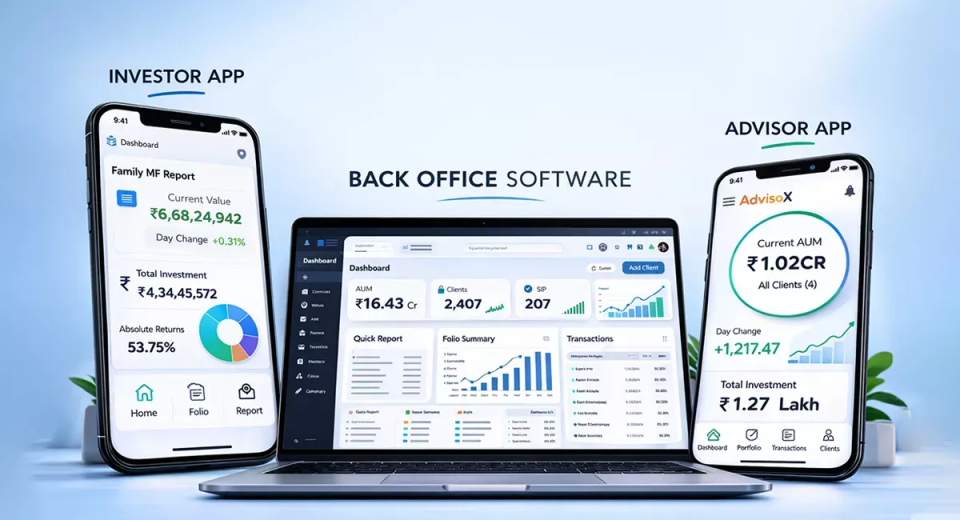
Today, the top mutual fund software in India plays a key role in making goal-based planning more effective and practical.
With upgraded features like the Goal GPS module, MFDs can present structured, data-backed plans during client conversations.
This makes discussions clearer, visual, and impactful.
What is Goal-Based Planning & How It Works
Goal-based planning is a way of investing where every investment is linked to a specific life goal, not just returns. Instead of focusing on market performance, the conversation shifts to what the investor wants to achieve — like education, retirement, or buying a house — and by when. This makes investing more purposeful, even during market volatility.
In wealth management software, this process is structured and easy to execute:
1. Define Goals
â— Create goals using Quick Goal Maker
â— Add details, timelines, and priorities
â— Personalize plans with client information
2. Map Investments
â— Align existing investments with goals
â— Identify any shortfall between savings and target
â— Plan new investments strategically
3. Track & Improve
â— Monitor progress through a goal tracker
â— View investment summaries and analysis
â— Get strategies to bridge shortfalls
Additional Benefits
â— Clear tracking of target vs achievement
â— Better client communication and engagement
â— Real-time view of portfolio and goal progress
How Can The Best Mutual Fund Software in India Help Attract Investors With This?
1. Create Goals for New Prospects
With the Best Mutual Fund Software in India, You can now create financial goals for prospects without setting up a full client profile.
This helps in:
â— Starting meaningful discussions instantly
â— Engaging prospects in the first meeting itself
â— Reducing onboarding friction
It becomes easier to convert interest into action.
2. More Accurate Planning with New Inputs
The module now includes additional inputs such as:
â— Current monthly savings
â— Current lump sum investments
â— Step-up percentage
These inputs ensure that:
â— Existing investments are considered
â— Future contributions are realistic
â— Planning reflects actual financial behaviour
This improves both accuracy and credibility.
3. Improved Output for Better Decision-Making
The upgraded system provides detailed insights, including:
â— Total projected value of current monthly savings
â— Total projected value of lump sum investments
â— Total savings at the time of the goal
â— Required corpus to achieve the goal
â— Gap between current savings and target
â— Required step-up to bridge the gap
This level of clarity helps investors understand exactly where they stand.
Why This Matters in Volatile Markets
When investors can clearly see:
â— Their goal
â— Their current progress
â— The gap they need to fill
They are less likely to stop investing.
Instead of reacting to market movements, they focus on staying on track.
For MFDs, this means:
â— Better client retention
â— Continued SIP investments
â— Stronger client relationships
Goal-based planning changes the nature of conversations.
Instead of saying: “Continue investing despite market volatility”
You can show:
â— The long-term impact of staying invested
â— The gap is created if investments are paused
â— The adjustments needed to stay on track
This approach is more logical, structured, and easier for investors to understand.
Final Thoughts
Market volatility is unavoidable. Investor reactions are natural. But how you support clients during these periods makes all the difference.
With goal-based planning and the right tools, you move beyond short-term market discussions, you provide clarity and structure, and you help investors stay focused on their goals. For MFDs, this is not just about managing volatility. It is about building long-term trust, improving retention, and growing sustainably, even in uncertain markets.